

Dependency Injection: a Python Way
Python DI patterns for clean, testable code
Dependency injection (DI) is a fundamental design pattern that promotes clean, testable, and maintainable code in Python applications.
Python DI patterns for clean, testable code
Dependency injection (DI) is a fundamental design pattern that promotes clean, testable, and maintainable code in Python applications.

How I fixed network problems in Ubuntu
After automatically installing a new kernel, Ubuntu 24.04 has lost the ethernet network. This frustrating issue occurred for me a second time, so I’m documenting the solution here to help others facing the same problem.

Automate Hugo deployment to AWS S3
Deploying a Hugo static site to AWS S3 using the AWS CLI provides a robust, scalable solution for hosting your website. This guide covers the complete deployment process, from initial setup to advanced automation and cache management strategies.

Master DI patterns for testable Go code
Dependency injection (DI) is a fundamental design pattern that promotes clean, testable, and maintainable code in Go applications.

Speed up Go tests with parallel execution
Table-driven tests are the idiomatic Go approach for testing multiple scenarios efficiently.
When combined with parallel execution using t.Parallel(), you can dramatically reduce test suite runtime, especially for I/O-bound operations.

Master line ending conversions across platforms
Line ending inconsistencies between Windows and Linux systems cause formatting issues, Git warnings, and script failures. This comprehensive guide covers detection, conversion, and prevention strategies.

Protect your privacy with advanced anti-fingerprinting
In the modern web, your digital identity can be tracked without cookies or explicit consent through sophisticated ditital fingerprinting techniques.

Cross-distro apps with Flatpak & Flathub
Flatpak is a next-generation technology for building and distributing desktop applications on Linux, offering universal packaging, sandboxing, and seamless cross-distribution compatibility.

Universal Linux packages with Snap manager
Snap is Canonical’s revolutionary universal package management system that brings containerized applications, automatic updates, and enhanced security to Ubuntu and other Linux distributions.

Essential APT & dpkg commands for Ubuntu packages
Ubuntu’s package management system is the backbone of software installation and maintenance, making it essential knowledge for any Linux user or system administrator.

Speed-up FLUX.1-dev with GGUF quantization
FLUX.1-dev is a powerful text-to-image model that produces stunning results, but its 24GB+ memory requirement makes it challenging to run on many systems. GGUF quantization of FLUX.1-dev offers a solution, reducing memory usage by approximately 50% while maintaining excellent image quality.

Optimize developing and running Hugo sites
Hugo caching strategies are essential for maximizing the performance of your static site generator. While Hugo generates static files that are inherently fast, implementing proper caching at multiple layers can dramatically improve build times, reduce server load, and enhance user experience.

Type-safe reusable code with Go generics
Generics in Go represent one of the most significant language features added since Go 1.0. Introduced in Go 1.18, generics enable you to write type-safe, reusable code that works with multiple types without sacrificing performance or code clarity.
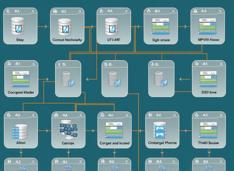
Complete guide to multi-tenancy database patterns
Multi-tenancy is a fundamental architectural pattern for SaaS applications, allowing multiple customers (tenants) to share the same application infrastructure while maintaining data isolation.

CLI development in Go with Cobra and Viper frameworks
Command-line interface (CLI) applications are essential tools for developers, system administrators, and DevOps professionals. Two Go libraries have become the de facto standard for CLI development in Go: Cobra for command structure and Viper for configuration management.

Cut LLM costs by 80% with smart token optimization
Token optimization is the critical skill separating cost-effective LLM applications from budget-draining experiments.