Markdown looks like one language until the same file renders differently on GitHub, Hugo, Obsidian, or Pandoc. And the problem is not that Markdown is unreliable.
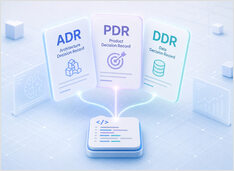
Decision records are the missing memory layer in AI-assisted software development. They capture not just what was built, but why — and that distinction becomes critical when AI tools are writing your code.
The premise is simple: compiled knowledge is more reusable than retrieved fragments.
RAG became the default answer to a straightforward question - how do I give an LLM access to external knowledge?
Author Hermes skills that load fast and behave reliably
Hermes Agent treats skills as the default way to teach repeatable workflows. Official documentation describes them as on-demand knowledge documents aligned with the open agentskills.io shape, loaded through progressive disclosure so the model sees a small index first and only pulls full instructions when a task actually needs them.
Boost SEO with breadcrumb schema and structured data
Breadcrumb navigation combined with proper schema markup is one of the most effective yet underutilized SEO techniques that can significantly improve your website’s search visibility and user experience.
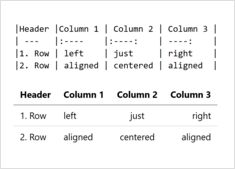
A Markdown table is a header row, a delimiter row of hyphens, and the data rows under it. The delimiter row is what turns the pipes into a table in GFM and in Hugo.
Converting LaTeX documents to Markdown has become essential for modern publishing workflows, integrating static site generators, documentation platforms, and version control systems while maintaining readability and simplicity.
Python for converting HTML to clean, LLM-ready Markdown
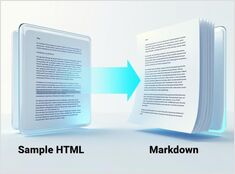
Converting HTML to Markdown is a fundamental task in modern development workflows, particularly when preparing web content for Large Language Models (LLMs), documentation systems, or static site generators like Hugo.
What to do with `canonical`, `lang` and `hreflang`
Translating your Hugo website
can improve your Google and Bing ranking - but only if the translated content is high quality, localized, and properly structured for multilingual SEO.
Using pandoc, python, or online tools for convertion to MD
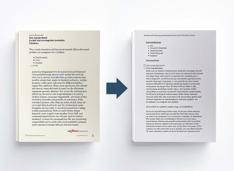
Converting Word documents to Markdown format is a very common task for technical writers, developers, and content creators who want to move their content to platforms with Markdown (like GitHub, GitLab, static site generators like Hugo).
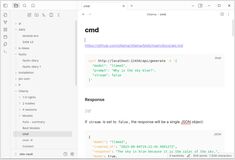
Fenced code blocks carry multi-line source in Markdown. The token after the opening fence is a language tag, and only the renderer decides what that tag highlights.