OpenClaw Production Setup Patterns with Plugins and Skills
How real OpenClaw systems are actually structured
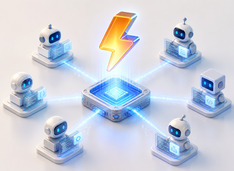
OpenClaw looks simple in demos. In production, it becomes a system.
How real OpenClaw systems are actually structured
OpenClaw looks simple in demos. In production, it becomes a system.
One database or a real search stack
The real argument is not whether PostgreSQL can search text or whether Elasticsearch can store documents. Both can. The interesting question is where search complexity should live.
Alerting is a response system, not a noise system
Alerting gets described as a monitoring feature far too often. That framing is convenient, but it hides the real problem.
Chat platforms as control planes for systems
Chat platforms have evolved far beyond messaging tools. In modern systems they operate as interfaces between automated processes and human decision making.
Turn Discord into a safe, interactive alert bus.
Discord becomes a serious integration surface when you treat it like one: a place where systems publish events, humans make decisions, and automation continues the workflow.
Slack is a workflow UI and alert delivery layer.
Slack integrations look deceptively easy because you can post a message in one HTTP call. The interesting part starts when you want Slack to be interactive and reliable.
Patterns for integrations, code structure, and data access.
Most app architecture advice is either too abstract to apply or too narrow to scale. Here are practical trade-offs for production systems across integration, code structure, and data access.
OpenClaw AI Assistant Guide
Most local AI setups start the same way: a model, a runtime, and a chat interface.
Build workflows in Go with the Temporal SDK
Elm-style (Go) vs immediate-mode (Rust) TUI frameworks quickview
Two strong options for building terminal user interfaces today are BubbleTea (Go) and Ratatui (Rust). One gives you an opinionated, Elm-style framework; the other a flexible, immediate-mode library.
Python DI patterns for clean, testable code
Dependency injection (DI) is a fundamental design pattern that promotes clean, testable, and maintainable code in Python applications.
Master DI patterns for testable Go code
Dependency injection (DI) is a fundamental design pattern that promotes clean, testable, and maintainable code in Go applications.
LongRAG, Self-RAG, GraphRAG - Next-gen techniques
Retrieval-Augmented Generation (RAG) has evolved far beyond simple vector similarity search. LongRAG, Self-RAG, and GraphRAG represent the cutting edge of these capabilities.
Build blazing-fast APIs with automatic docs and type safety
FastAPI has emerged as one of the most exciting Python web frameworks for building APIs, combining modern Python features with exceptional performance and developer experience.
Build production-ready REST APIs with Go's robust ecosystem
Building high-performance REST APIs with Go has become a standard approach for powering systems at Google, Uber, Dropbox, and countless startups.
Build maintainable Python apps with SOLID design patterns
Clean Architecture has revolutionized how developers build scalable, maintainable applications by emphasizing separation of concerns and dependency management.