A2A vs MCP: Do AI Agents Really Need Both Protocols?
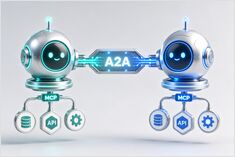
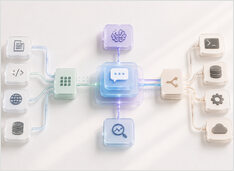
MCP gives agents tools. A2A gives agents peers.
AI agent architecture is starting to split into two layers.
MCP gives agents tools. A2A gives agents peers.
AI agent architecture is starting to split into two layers.
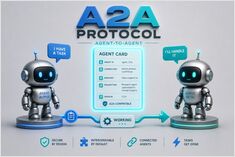
A2A turns agents into network peers.
The A2A Protocol, short for Agent2Agent Protocol, is an open standard for communication between independent AI agent systems.
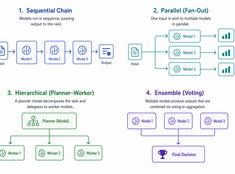
Pick the simplest pattern that works.
Single-model systems are simple. Multi-model systems are powerful. The challenge isn’t choosing models — it’s designing the architecture that orchestrates them.
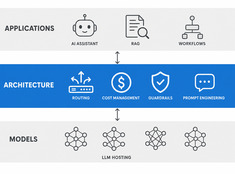
How serious assistants are actually built.
A production AI assistant is not “an LLM with a prompt”. It is a system that accepts intent, keeps state, decides when to retrieve or act, and exposes enough runtime detail to debug failures.
Stop parsing vibes. Validate contracts.
Most LLM “structured output” tutorials are unserious. They teach you to ask for JSON politely and then hope the model behaves. That is not validation. That is optimism with braces.
Agentic LLM tuning reference
This page is a practical reference for agentic LLM inference tuning (temperature, top_p, top_k, penalties, and how they interact in multi-step and tool-heavy workflows).
Build Claude Skills that survive real work
Most teams misuse Claude Skills in one of two ways. They either turn SKILL.md into a dumping ground, or they never graduate from giant copy-pasted prompts.
Agentic coding, now with local model backends.
Claude Code is not autocomplete with better marketing. It is an agentic coding tool: it reads your codebase, edits files, runs commands, and integrates with your development tools.
Serve open models fast with SGLang.
SGLang is a high-performance serving framework for large language models and multimodal models, built to deliver low-latency and high-throughput inference across everything from a single GPU to distributed clusters.
Hot-swap local LLMs without changing clients.
Soon you are juggling vLLM, llama.cpp, and more—each stack on its own port. Everything downstream still wants one /v1 base URL; otherwise you keep shuffling ports, profiles, and one-off scripts. llama-swap is the /v1 proxy before those stacks.
What actually happens when you run Ultrawork.
Oh My Opencode promises a “virtual AI dev team” — Sisyphus orchestrating specialists, tasks running in parallel, and the magic ultrawork keyword activating all of it.
OpenCode LLM test — coding and accuracy stats
I have tested how OpenCode works with several locally hosted on Ollama and llama.cpp LLMs, and for comparison added some Free models from OpenCode Zen.
Meet Sisyphus and its specialist agent crew.
The biggest capability jump in OpenCode comes from specialised agents: deliberate separation of orchestration, planning, execution, and research.
OpenHands CLI QuickStart in minutes
OpenHands is an open-source, model-agnostic platform for AI-driven software development agents. It lets an agent behave more like a coding partner than a simple autocomplete tool.
Install Oh My Opencode and ship faster.
Oh My Opencode turns OpenCode into a multi-agent coding harness: an orchestrator delegates work to specialist agents that run in parallel.